

Key takeaways
Remember when growing on LinkedIn felt like a numbers game? Build your following, publish a post, collect a few likes, and hope the algorithm decides to bless your content with a little extra attention.
For years, that was the general approach to LinkedIn marketing. But the platform has been making some interesting changes to how its feed works, and those old habits aren’t necessarily enough anymore.
LinkedIn is getting better at understanding what people post about, what their audiences care about, and which conversations deserve attention beyond an author’s immediate network.
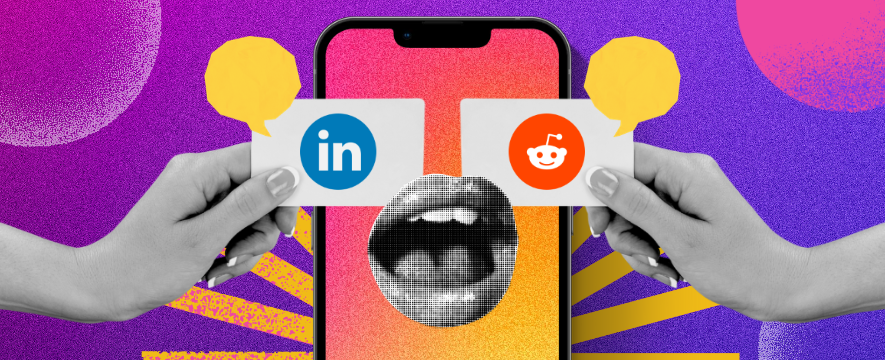
And here’s where things get interesting. LinkedIn is starting to behave a lot like Reddit.
Yes, Reddit.
The internet’s favorite place for brutally honest opinions, oddly specific communities, and people who will spend 45 minutes explaining why your question was already answered in a thread from 2017.
On Reddit, communities revolve around shared interests, useful contributions spark discussions, and overly promotional posts tend to get called out pretty quickly. LinkedIn is moving in a similar direction, with some important implications for marketers, business owners, and content creators.
In March 2026, LinkedIn announced significant improvements to its feed-ranking system, introducing more advanced AI models designed to better understand the subjects people discuss and how those subjects relate to individual members’ professional interests.
According to LinkedIn’s official feed update, these changes aim to make the feed more personalized and useful while reducing repetitive content, engagement bait, and inauthentic interactions.
Its engineering team explained that the updated system uses large language models to identify connections between content, professional backgrounds, and individual interests. This allows LinkedIn to recommend relevant posts from people outside someone’s immediate network.
In other words, you have more opportunities to reach people who genuinely care about your expertise, even if they’ve never heard of you before.
And that’s where the Reddit comparison starts to make sense.
Reddit organizes conversations into communities called subreddits, each centered around a specific subject. Someone looking for graphic design advice can explore r/graphic_design, while a marketer might head to r/marketing to exchange ideas with other professionals.
LinkedIn doesn’t organize its main feed into subreddits, but its recommendation system increasingly considers the topics people engage with and the professional interests reflected in their profiles and activity.
Think about someone who regularly reads posts about branding, follows creative directors, and participates in discussions about design systems. LinkedIn can recognize those patterns and recommend related content, including posts from people that person doesn’t follow.
For creators, this creates opportunities to build visibility around specific areas of expertise. A smaller account consistently sharing valuable insights about brand identity may be able to reach interested audiences beyond its existing followers.
Meanwhile, an account jumping between leadership quotes, cryptocurrency predictions, productivity hacks, and whatever happens to be trending may have a harder time establishing a recognizable professional identity.
At some point, you’ve covered leadership, innovation, disruption, growth, and the future of literally everything. Congratulations, you’ve unlocked Corporate Buzzword Bingo. Your audience still has no idea what you actually do.
The opportunity is to become recognizable for something specific. When your content consistently addresses the interests and challenges of your target audience, you’re giving people a clearer reason to pay attention.
We explored a similar principle in our guide to finding real audience insights through Reddit, where understanding niche communities and their conversations helps marketers discover what people actually care about.
On Reddit, upvotes help communities surface content they find valuable. LinkedIn uses a more complex recommendation system that evaluates multiple signals when deciding which posts to show.
According to LinkedIn’s explanation of how its feed works, these signals include what a post discusses, whether it provides useful knowledge, and how members interact with content through reading, reacting, commenting, and sharing.
A like still matters, but it’s only one piece of the puzzle.
For marketers, this means paying closer attention to the value of the content itself. A post explaining how your team solved a difficult branding challenge may offer more professional value than another generic motivational quote about believing in yourself.
Your coworkers might politely like that quote. A potential customer, however, could remember the person who helped them understand a problem they’ve been struggling with.
And in a feed full of people announcing they’re “humbled and honored,” a genuinely useful insight can be pretty refreshing.
If you’ve spent time exploring Reddit threads, you’ve probably noticed that some of the best information lives in the comments. People share experiences, challenge assumptions, and occasionally provide more useful insights than the original post.
LinkedIn has always supported professional discussions, but its recent updates reinforce the importance of authentic participation.
In its 2026 announcement about improving feed quality, LinkedIn specifically addressed automated comments, engagement pods, and content designed primarily to generate artificial engagement.
That should give marketers something to think about when developing their content.
A generic post asking everyone to comment “AGREE” might generate responses, but sharing a specific industry observation or lesson learned gives people something more meaningful to discuss.
And if your entire engagement strategy depends on 37 people commenting “Great insight!” we might have a bigger problem than the algorithm.
The opportunity is to create posts that encourage people to contribute their own experiences, ask questions, or offer different perspectives. Those conversations can make your content more valuable to everyone participating.
A lot of brands still treat LinkedIn like a digital billboard. They spend time creating a post, publish it, and move on to the next item in their content calendar. Then they return the following day to check whether the algorithm was feeling generous.
We’ve all done it. Sometimes there’s a full marketing calendar to manage, and responding to comments falls somewhere between finishing a client presentation and remembering to eat lunch.
But imagine doing that at an actual networking event. You walk into the room, announce your latest thought leadership masterpiece, and immediately leave before anyone gets a chance to respond.
Awkward, right?
LinkedIn’s documentation on social activity explains that actions such as posting, reacting, and commenting help its systems understand members’ interests and personalize their feeds.
There’s also a practical benefit to participating in conversations beyond your own posts. Every relevant discussion is an opportunity to introduce your expertise to people who might otherwise never encounter your content.
For example, let’s say you’re a brand strategist and someone in your network shares a post about struggling to maintain brand consistency across different channels. Instead of leaving a generic compliment, you could share a practical lesson from a similar project, recommend an approach that’s worked for your team, or ask a question that moves the discussion forward.
That kind of participation can make your expertise visible in conversations your target audience is already having. It also gives people a reason to visit your profile, explore your work, and potentially connect.
The best part? You don’t need to spend hours scrolling through LinkedIn. Try dedicating 20 minutes a day to finding relevant conversations and contributing thoughtful comments where you genuinely have something useful to add.
Because sometimes, your next opportunity starts in someone else’s comment section. And thankfully, you don’t need another carefully crafted “I’m thrilled to announce” post to get there.
For brands trying to build a stronger LinkedIn presence, these changes create an opportunity to reach people who are genuinely interested in their expertise and develop relationships through relevant conversations.
Of course, there’s still the practical challenge of making it all happen.
Someone needs to develop the ideas, write the posts, create the graphics, maintain brand consistency, and make time for engagement. And if you’re part of a lean marketing team, you probably already have 14 tabs open, three campaigns in progress, and someone asking whether you can “just quickly” design something before lunch.
Ah yes, the glamorous life of marketing.
A repeatable content workflow makes this easier to manage. Start with your core topics, plan content around real audience questions, and turn strong ideas into multiple useful formats. A single client project, for example, could become a LinkedIn case study, a behind-the-scenes carousel, and a short video explaining the creative process.
Having a reliable creative production system also gives your team more room to focus on the conversations and relationships that require a human touch.
Our creative operations playbook for lean marketing teams explores how to manage growing content demands without letting production bottlenecks take over your calendar.
And when your content is supported by consistent messaging and design, it becomes easier to build a recognizable brand presence. We cover that in more detail in our article on why your brand feels inconsistent.
Ultimately, LinkedIn’s evolving feed is giving marketers another reason to pay attention to what their audience finds valuable. Follower growth and impressions are still worth monitoring, but the conversations your content creates and the professional relationships you develop deserve attention, too.
So the next time you’re preparing a LinkedIn post, share something useful, make room for discussion, and stick around to participate.
Besides, you’ve already put in the work to create the post. You might as well show up for the fun part.
Creative Shizzle helps growing brands and lean marketing teams turn strong ideas into polished, on-brand content and campaign creative. Whether you need ongoing design support or a few standout assets to keep your content moving, we’ve got the creative firepower to help.
Taylor Wilson is the Founder and CEO at Creative Shizzle, a creative partner for brands ready to move beyond disconnected marketing and into scalable, trust-driven growth systems. With 20+ years of experience in marketing and branding, she focuses on aligning strategy, design, and AI to create sustainable, high-impact growth.
Join our mailing list to get our updates and marketing and design tips and tricks.
We use cookies to enhance your browsing experience, serve personalized ads or content, and analyze our traffic. By clicking "Accept", you consent to our use of cookies. You can manage your preferences or withdraw consent at any time.